













How to Protect Your Phone During Rain (2026 Guide)
Learn how to protect your phone during rain with practical tips, waterproof accessories & what to do if it gets wet, plus live deals on Discount Deals Live.
A single monsoon downpour is one of the most common ways phones get damaged in India — not from dropping them, but from a sudden shower catching people off guard mid-commute. Even phones marketed as "water-resistant" have limits that are easy to misunderstand. Here's a practical guide to actually protecting your phone this season, along with what to do if it does get wet.
Understand What "Water Resistant" Actually Means
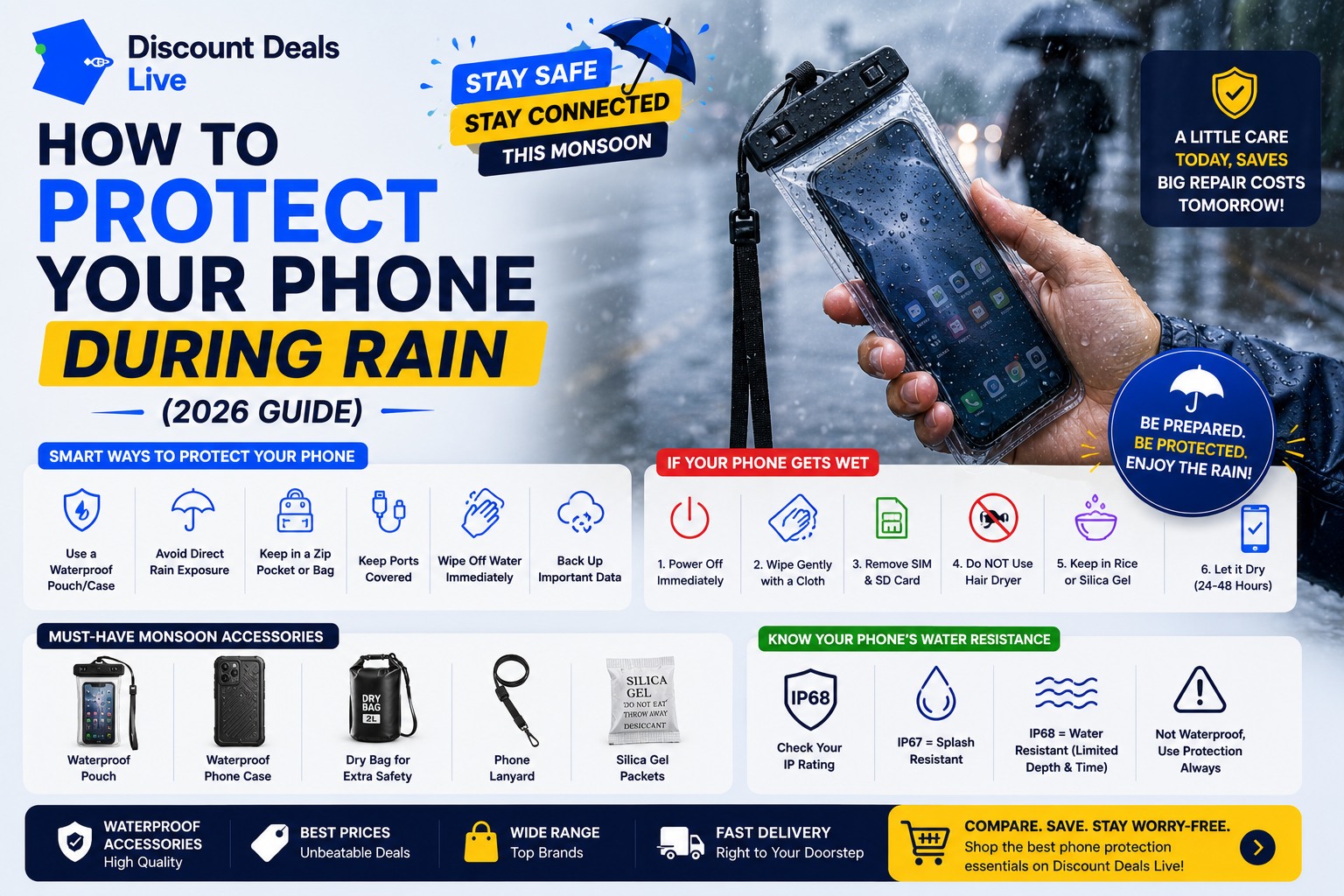
Most modern phones carry an IP rating (like IP68), which indicates a tested level of water and dust resistance — but this doesn't mean the phone is fully waterproof under all conditions. A few important limits:
- IP ratings are based on lab testing in clean, still water — monsoon rain, puddles, and humidity are less predictable
- The seal that gives a phone its water resistance can weaken over time, especially after drops or repairs
- IP ratings typically don't cover damage from pressurized water (like a shower) or prolonged submersion beyond the tested duration
In short: don't treat an IP rating as a reason to be careless with your phone in heavy rain. It's a safety margin, not a guarantee.
Practical Ways to Protect Your Phone
- Use a waterproof pouch during your commute — these are inexpensive and let you still use the touchscreen through the clear plastic in many designs
- Keep a small microfiber cloth in your bag — quickly drying your phone after light exposure prevents water from working its way into ports and seams
- Avoid charging a wet phone — charging ports are one of the most common points of water damage; let the phone fully dry before plugging it in
- Use a rugged, sealed phone case — cases with sealed port covers add a meaningful extra layer of protection beyond the phone's built-in resistance
- Turn off the phone if it gets significantly wet — this reduces the risk of a short circuit while moisture is present
Pros & Cons of Different Protection Methods
Waterproof pouches:
- Pros: cheap, reusable, lets you use the phone while protected
- Cons: slightly reduces touchscreen sensitivity and camera clarity while in use
Sealed rugged cases:
- Pros: constant protection without needing to remember to use a pouch
- Cons: bulkier daily carry, can be less comfortable for one-handed use
Just relying on the phone's built-in IP rating:
- Pros: no extra accessory needed
- Cons: offers no protection against seal degradation over time or unpredictable heavy rain exposure
Choosing a Waterproof Pouch or Case
- Check for a sealed, latched closure rather than just a fold-over top
- Look for clear touchscreen-compatible material if you need to use the phone while it's in the pouch
- For cases, check that charging ports have a proper sealed flap, not just a loose cover
- Confirm the size fits your specific phone model, especially for larger phones
a well-reviewed waterproof phone pouch — LINK is a low-cost option that covers most commuting scenarios.
a rugged waterproof phone case — LINK is a good option if you want continuous protection without carrying a separate pouch.
What to Do If Your Phone Gets Wet
If your phone does get wet despite precautions, avoid the common mistakes people make under pressure:
- Turn it off immediately if it isn't already
- Do not charge it while wet or immediately after
- Gently dry the outside with a soft cloth, including ports and speaker grilles
- Avoid using rice as a drying method — it's a common myth, and rice dust can actually get into ports and cause more harm than good
- If available, use a proper silica gel pack or a dedicated phone-drying pouch instead
- Wait at least 24 hours before attempting to power it back on, if it was significantly wet
If the phone doesn't power on normally after drying, it's worth getting it checked by a professional rather than repeatedly trying to force it on, since that can worsen internal damage.
Quick Comparison Checklist
| Protection method | Best for |
|---|---|
| Waterproof pouch | Commuters who need to use the phone during light-to-moderate rain |
| Rugged sealed case | Daily protection without needing a separate accessory |
| Microfiber cloth | Quick drying after brief, light exposure |
| Avoiding charging when wet | Preventing port and internal damage |
Today's Best Deals on Phone Protection
Prices on waterproof pouches and rugged cases shift with monsoon demand, so it's worth checking live pricing before buying:
- See real-time results for this exact search on Waterproof Phone Pouch — Live Search
- Browse the full Mobiles & Tablets category for related accessories
- Compare listings across Amazon Deals and Flipkart Deals side by side
Frequently Asked Questions
Is my phone's IP68 rating enough protection during monsoon?
It provides a baseline of protection, but the seal can weaken over time, and IP ratings are based on controlled lab conditions rather than unpredictable rain and humidity. A waterproof pouch or case adds meaningful extra protection, especially for older phones or those that have been dropped or repaired.
Is putting a wet phone in rice actually effective?
No, this is a widely repeated myth. Rice absorbs moisture very slowly and inconsistently, and rice dust can get into ports and speakers, causing additional damage. Silica gel packs or simply air-drying in a dry, ventilated spot work better.
How long should I wait before charging a phone that got wet?
It's safer to wait at least 24 hours, or until you're confident the phone and its ports are completely dry, before charging. Charging a wet phone significantly increases the risk of a short circuit.
Do waterproof pouches actually let me use the touchscreen?
Many pouches are designed with touchscreen-compatible material, though sensitivity can be slightly reduced compared to using the phone directly. Check product reviews for how well touch response works through the specific pouch you're considering.
Check Best Deals for current live pricing on phone protection accessories before you buy — a small investment now is far cheaper than repairing water damage later.