














iPhone 17 vs Samsung Galaxy S26: Full Comparison (2026)
iPhone 17 vs Samsung Galaxy S26 compared — display, camera, battery & performance. Find the best price on Discount Deals Live.
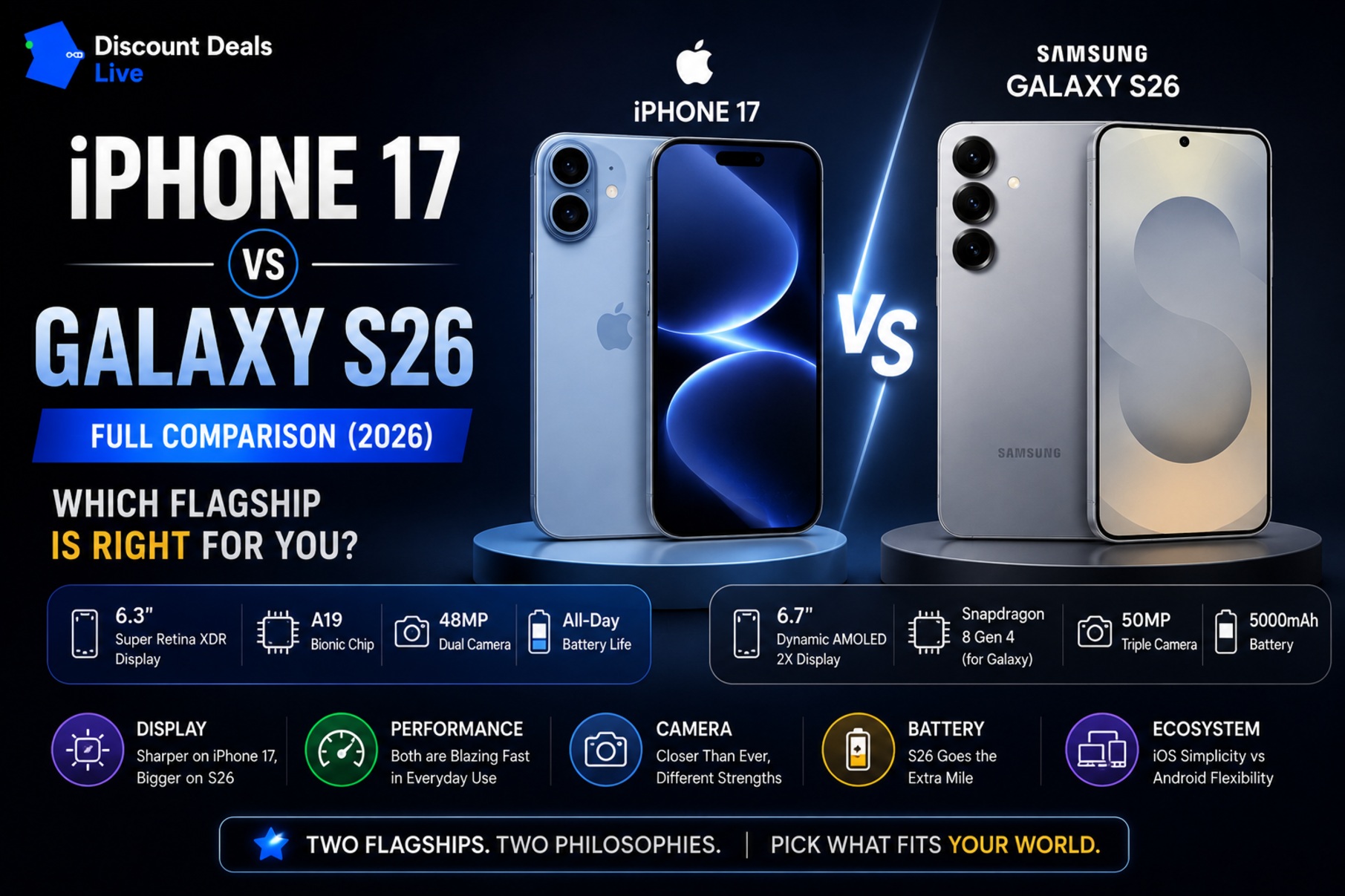
Both the iPhone 17 and Samsung Galaxy S26 sit in the same flagship price bracket, but they take noticeably different approaches — Apple leaning into display sharpness and its usual ecosystem strengths, Samsung pushing a larger battery, higher RAM, and a thinner, lighter body. Here's how they actually compare on the specs that matter for day-to-day use.
Display
Both phones use a 6.3-inch screen with a 120Hz refresh rate, but the underlying panels differ. The iPhone 17's OLED display has a higher resolution and pixel density, giving it a slight edge in sharpness for fine text and detail. The Galaxy S26's Dynamic AMOLED panel is still sharp for everyday use and tends to offer punchier colors and contrast, which is a longstanding characteristic of Samsung's AMOLED panels compared to Apple's OLED tuning.
Bottom line: iPhone 17 edges ahead on pixel density and detail sharpness; Galaxy S26 tends to look punchier for color and contrast.
Camera
The Galaxy S26 has a triple rear camera setup with a higher main sensor resolution, while the iPhone 17 uses a dual rear camera setup with a slightly lower resolution main sensor. On paper, Samsung's higher megapixel count and extra lens give it more versatility (particularly for zoom and wide-angle shots). Apple's cameras have historically punched above their megapixel count due to computational photography and processing, so real-world photo quality between the two is closer than the spec sheet alone suggests. For front camera resolution, the iPhone 17 has the higher-resolution selfie camera of the two.
Bottom line: Galaxy S26 offers more versatility with an extra lens and higher rear resolution; iPhone 17 has the edge for selfie camera resolution and its usual strong photo processing.
Battery Life
The Galaxy S26 has a meaningfully larger battery capacity than the iPhone 17. On paper this suggests better battery life, though actual real-world endurance also depends heavily on software optimization, display efficiency, and usage patterns — Apple's tighter hardware-software integration has historically helped iPhones perform well relative to their battery capacity compared to Android devices with similar specs. Still, the capacity gap here is large enough that it's a genuine consideration if all-day battery life is a priority.
Bottom line: Galaxy S26's larger battery capacity gives it an advantage on paper, though real-world results depend on usage.
Performance
Based on published benchmark comparisons, the Galaxy S26 has shown stronger multi-core performance scores compared to the iPhone 17 in some tests. That said, benchmark numbers don't always translate directly to real-world app performance and responsiveness, where both platforms tend to feel smooth for typical daily use — browsing, social media, video, and most mobile games run comfortably on either device.
Build and Design
The Galaxy S26 is reported to be thinner and lighter than the iPhone 17, continuing a general trend of Samsung's base S-series models trimming weight and thickness compared to previous generations. Both phones carry an IP68 rating for water and dust resistance, so durability against everyday spills and dust exposure is comparable.
Biometrics and Unlock
The iPhone 17 uses Face ID (3D face unlock), while the Galaxy S26 uses an ultrasonic in-screen fingerprint sensor. This comes down to personal preference — some people prefer the convenience of face unlock, especially when a phone is lying flat on a desk, while others prefer the speed and reliability of an in-screen fingerprint sensor, particularly when wearing a mask or in low light where face unlock can be less reliable.
Pros & Cons
iPhone 17:
- Pros: sharper display resolution, strong front camera, tight software-hardware integration, long-standing ecosystem strength (AirDrop, iMessage, cross-device features for existing Apple users)
- Cons: smaller battery capacity on paper, single extra lens fewer than Galaxy S26's setup, heavier and thicker body
Samsung Galaxy S26:
- Pros: larger battery capacity, higher RAM, more versatile triple camera setup, thinner and lighter design
- Cons: lower display resolution compared to iPhone 17, in-screen fingerprint can be less consistent than Face ID in some conditions
Which One Should You Buy?
- Choose iPhone 17 if: you're already in the Apple ecosystem (Mac, iPad, AirPods), prioritize display sharpness and front camera quality, or prefer Face ID over fingerprint unlock
- Choose Galaxy S26 if: you want longer battery life on paper, prefer a more versatile camera setup with an extra lens, want a thinner and lighter phone, or are already invested in the Android/Samsung ecosystem
Quick Comparison Table
| Feature | iPhone 17 | Samsung Galaxy S26 |
|---|---|---|
| Display | 6.3" OLED, higher resolution | 6.3" Dynamic AMOLED |
| Rear camera | Dual camera setup | Triple camera setup, higher resolution |
| Front camera | Higher resolution | Lower resolution |
| Battery | Smaller capacity | Larger capacity |
| Build | Heavier, thicker | Lighter, thinner |
| Unlock | Face ID | In-screen fingerprint |
| Water resistance | IP68 | IP68 |
Today's Best Deals
Prices on both flagships shift with bank offers and exchange deals. Check live pricing before you buy:
- See real-time results for this exact search on iPhone 17 vs Galaxy S26 — Live Search
- Browse the full Mobiles & Tablets category for related deals
- Compare listings across Amazon Deals and Flipkart Deals side by side
Frequently Asked Questions
Which has better battery life, iPhone 17 or Galaxy S26?
The Galaxy S26 has a larger battery capacity on paper, which generally suggests longer battery life. However, real-world endurance also depends on software optimization and usage patterns, where the iPhone has historically performed well relative to its capacity due to tight hardware-software integration.
Is the camera better on iPhone 17 or Galaxy S26?
The Galaxy S26 has a more versatile triple-camera setup with a higher-resolution main sensor, while the iPhone 17 has a higher-resolution front camera and Apple's typically strong computational photography processing. Overall photo quality is close between the two, with each having specific strengths.
Should I switch from iPhone to Galaxy S26, or stick with iPhone 17?
This mostly comes down to ecosystem investment — if you already use other Apple devices (Mac, iPad, AirPods) and depend on features like AirDrop or iMessage, staying with iPhone often makes more practical sense. If you're not tied to either ecosystem, comparing the specific features that matter most to you (battery, camera versatility, display sharpness) is the better approach.
Which phone is better value for money?
This depends on region-specific pricing and ongoing deals more than raw specs, since both phones are closely matched overall. Comparing live pricing and any bank or exchange offers at the time of purchase is the most reliable way to judge value.
Check Best Deals for current live pricing on both the iPhone 17 and Galaxy S26 before you buy — comparing platforms and ongoing offers can meaningfully change which one offers better value at any given time.