

Top 10 Umbrellas That Can Survive Heavy Rain (2026)
Looking for an umbrella that survives heavy rain and wind? Check these 10 must-have features and top picks on Discount Deals Live.
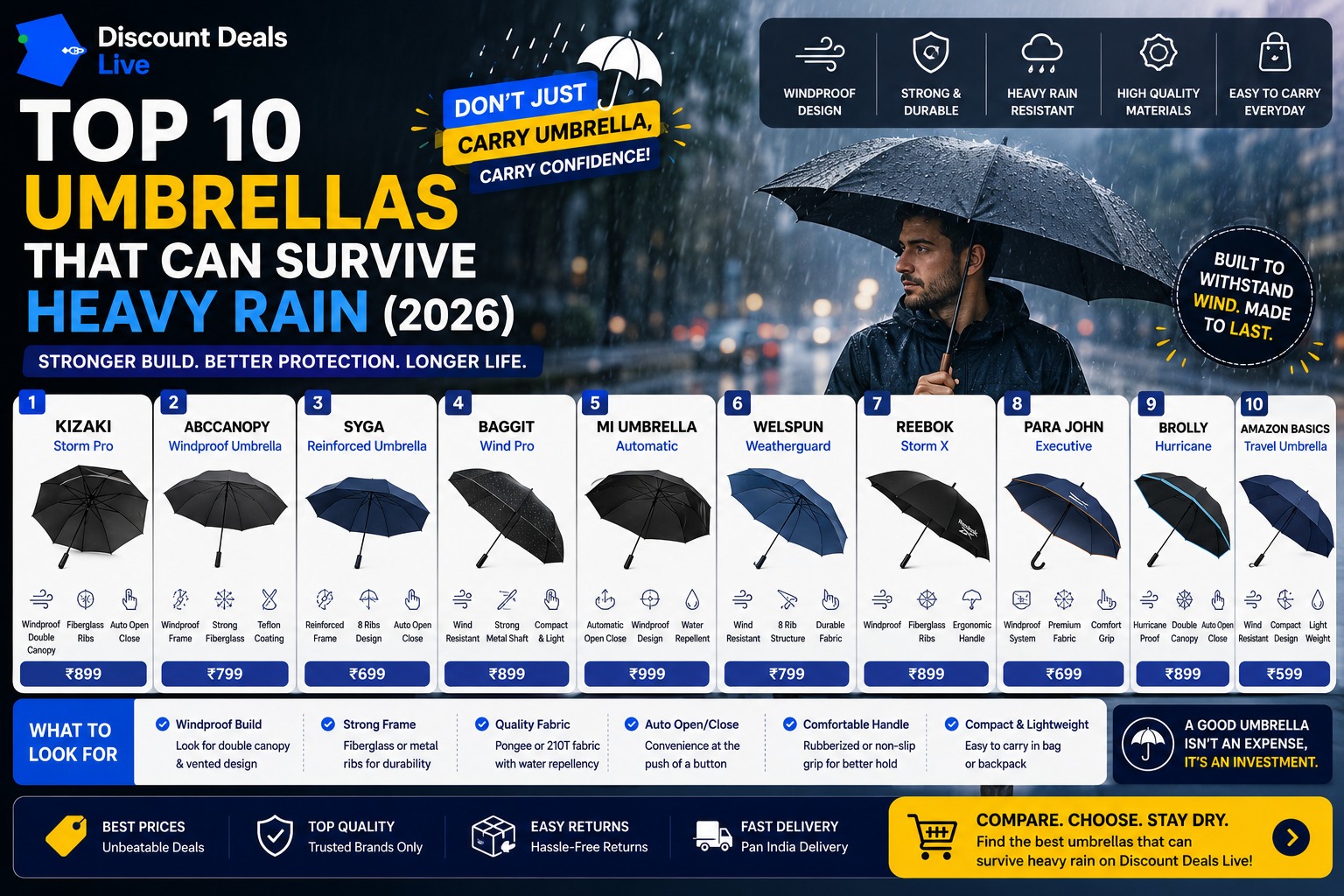
Most umbrellas don't fail because of rain — they fail because of wind. A sudden gust turns a flimsy frame inside out, and that's usually the end of it. If you've gone through more umbrellas than you'd like to admit in a single monsoon season, the issue is almost always the build quality, not bad luck. Here are the 10 things that actually separate a genuinely durable umbrella from one that won't survive the season.
1. Rib Count and Material
More ribs generally mean better structural support against wind, but material matters just as much as count. Fiberglass ribs flex under pressure and spring back instead of snapping, which is a major upgrade over cheaper steel ribs that bend permanently once pushed too far.
2. Wind-Vented Canopy Design
Umbrellas with small vents built into the canopy let wind pass through instead of catching the full force, which is one of the biggest reasons vented umbrellas survive gusts that would invert a standard design.
3. Double-Layer or Reinforced Canopy
A double-canopy design adds an extra layer of wind resistance without needing to be significantly heavier, since the two layers work together to dissipate wind pressure rather than catching it directly.
4. Frame Flexibility (Inversion-Resistant Design)
Look specifically for umbrellas marketed as "reverse-fold" or with a frame that's designed to flex and invert briefly without breaking, then pop back into shape. This is one of the most useful features for genuinely windy monsoon days.
5. Shaft Material
Fiberglass or reinforced steel shafts hold up better under repeated stress than basic aluminum, especially if the umbrella gets used daily rather than occasionally.
6. Canopy Fabric (Water Repellency and Durability)
Beyond just "waterproof," check for a tightly woven, durable fabric (like pongee or a similar dense weave) that resists tearing at the rib points, which is usually where cheaper umbrella fabric fails first.
7. Handle Grip and Comfort
An umbrella held tightly against wind for extended periods needs a grip that doesn't slip when wet. Textured or rubberized handles perform noticeably better than smooth plastic in actual use.
8. Size vs Portability Trade-off
Larger canopies offer better coverage but catch more wind; compact umbrellas are easier to carry and handle wind better structurally but cover less area. Choosing based on your actual daily use (walking commute vs occasional carry) matters more than just picking the biggest option.
9. Auto-Open/Close Mechanism Reliability
Convenient, but auto mechanisms add moving parts that can fail over time. If you want this feature, check reviews specifically mentioning mechanism durability after months of regular use, not just initial impressions.
10. UV and Sun Protection Coating
Not directly related to rain survival, but a coated canopy that also blocks UV rays makes the umbrella useful year-round rather than sitting unused outside monsoon season — better value for the same purchase.
Pros & Cons of Investing in a Sturdy Umbrella
Pros:
- A genuinely wind-resistant umbrella lasts multiple seasons instead of being replaced every few weeks
- Better structural design means less frustration and fewer last-minute replacement purchases
- Often doubles as sun protection outside monsoon months
Cons:
- Higher-quality umbrellas cost more upfront compared to basic disposable options
- Larger, sturdier designs can be less compact to carry daily
- Auto-open mechanisms, while convenient, add potential failure points over time
Which Type Should You Buy?
- Daily bike/scooter commuters: prioritize a compact, wind-vented design that's easy to store in a bag or under the seat
- Walking commuters: a slightly larger canopy with reinforced ribs offers better coverage without much downside
- Frequent flyers/travelers: a compact, reverse-fold umbrella balances portability with wind resistance well
a well-reviewed windproof umbrella with reinforced ribs — LINK is a commonly recommended option for heavy monsoon conditions.
a compact reverse-fold umbrella for travel and daily commuting — LINK is a popular pick for portability without sacrificing durability.
Quick Comparison Checklist
| Feature | Why it matters |
|---|---|
| Fiberglass ribs | Flex instead of snapping under wind pressure |
| Wind vents | Let gusts pass through instead of inverting the canopy |
| Reverse-fold frame | Survives brief inversion without breaking |
| Reinforced fabric | Resists tearing at rib points |
| Textured grip | Stays secure in wet, windy conditions |
Today's Best Deals on Umbrellas
Umbrella pricing and stock shift as monsoon demand rises. Check live pricing before buying:
- See real-time results for this exact search on Best Umbrellas — Live Search
- Browse the full Bags & Accessories category for related deals
- Compare listings across Amazon Deals and Flipkart Deals side by side
Frequently Asked Questions
What actually makes an umbrella "windproof"?
No umbrella is fully immune to strong wind, but features like vented canopies, flexible fiberglass ribs, and reverse-fold frames significantly improve how well an umbrella handles gusts without breaking, compared to standard budget designs.
Is a bigger umbrella always better for heavy rain?
Not necessarily — larger canopies offer more coverage but also catch more wind, making them more prone to inversion in gusty conditions. A well-built compact or medium umbrella with reinforced ribs often performs better overall in genuinely windy monsoon weather.
Are auto-open umbrellas less durable than manual ones?
They can be, since the spring mechanism is an additional moving part that can wear out over time. If durability is your top priority over convenience, a well-built manual umbrella is generally the safer long-term choice.
How often should I replace my umbrella?
A well-built, wind-resistant umbrella can reasonably last multiple monsoon seasons with proper care (drying it fully before storing, avoiding forcing it closed while still wet). Cheaper designs often need replacing within a single season of regular use.
Check Best Deals for current live pricing on umbrellas before you buy — prices for well-reviewed windproof designs can shift as monsoon demand rises.