


















Best Protein Powders in India (2026)
Looking for the best protein powder for your fitness goals? Compare whey, plant-based & casein options, plus live deals on Discount Deals Live.


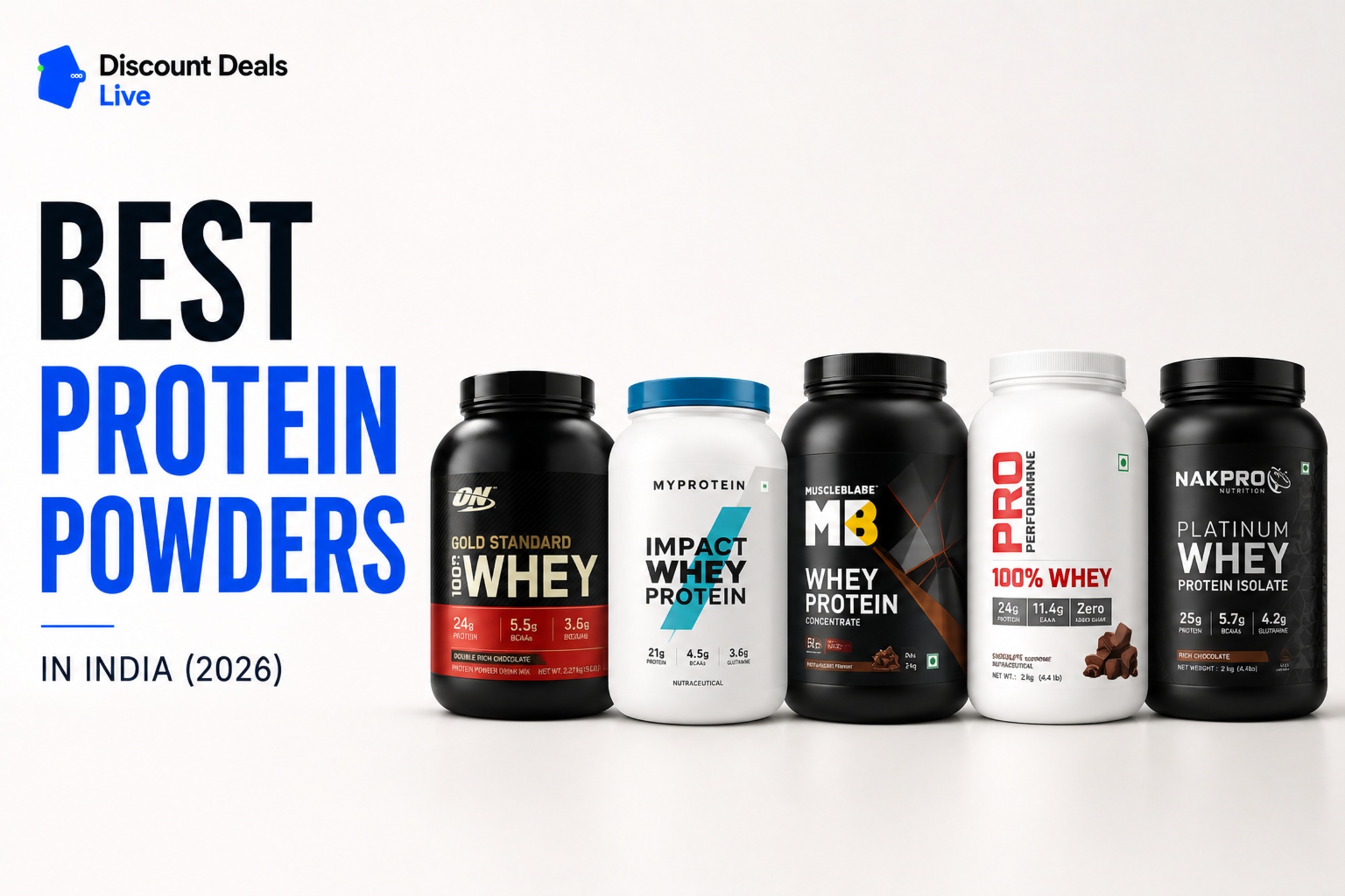
Protein powder shopping can feel overwhelming given how many types and marketing claims are out there. The right choice mostly comes down to your dietary preferences, fitness goals, and how your body responds to different protein sources — there isn't a single "best" powder that works optimally for everyone.
Types of Protein Powder
- Whey protein concentrate — the most common and generally most affordable whey option, containing a good protein percentage along with some fat and carbohydrates
- Whey protein isolate — more processed than concentrate, offering a higher protein percentage with less fat and carbs, and generally easier to digest for some people
- Casein protein — digests more slowly than whey, often used before sleep for a slower, sustained release of amino acids overnight
- Plant-based protein (pea, soy, rice, or blends) — suited for vegans, those with dairy sensitivities, or anyone preferring non-dairy protein sources; blends of different plant proteins are often used to provide a more complete amino acid profile
- Egg white protein — a dairy-free animal protein option, though less common and often pricier than whey-based alternatives
What to Check Before Buying
- Protein content per serving — check the actual protein grams per serving rather than relying on the total product weight or serving size alone, since this varies between brands
- Added sugar and artificial sweeteners — worth checking if you're monitoring sugar intake, since some flavored protein powders contain more added sugar than expected
- Third-party testing/certification — certifications indicating the product has been tested for banned substances or label accuracy add a layer of trust, particularly relevant for competitive athletes
- Digestibility — isolate or plant-based blends are sometimes easier to digest for those who experience bloating with concentrate-based whey
- Flavor and mixability — genuinely affects whether you'll actually use the product consistently; checking reviews specifically mentioning taste and how well it dissolves is worth the extra attention
Pros & Cons by Protein Type
Whey Protein:
- Pros: widely available, generally more affordable, well-studied for fitness and recovery use
- Cons: not suitable for those with dairy sensitivities or following a vegan diet
Plant-Based Protein:
- Pros: suitable for vegan and dairy-sensitive individuals, often includes fiber and other nutrients from source ingredients
- Cons: can have a different taste and texture profile compared to whey, sometimes requires blending multiple plant sources for a complete amino acid profile
For Muscle Building and Post-Workout Recovery
If your main goal is supporting muscle recovery after training:
- Whey protein isolate or concentrate is commonly used for this purpose due to fast absorption
- Check protein content per serving specifically, rather than assuming all products offer similar amounts
- Consider casein for a slower-release option if you're also looking for an overnight protein source
a well-reviewed whey protein suited for post-workout recovery — LINK is a commonly recommended option for this goal.
For Vegan or Dairy-Sensitive Diets
If you avoid dairy or follow a plant-based diet:
- Look for blended plant protein sources (like pea and rice combined) for a more complete amino acid profile
- Check for any added allergens if you have other dietary sensitivities beyond dairy
- Taste and texture can vary more between plant-based brands than whey, so checking reviews specifically on this is worth it
a well-reviewed plant-based protein blend — LINK works well for this dietary need.
Understanding Serving Sizes and Usage
Protein powder serving sizes and recommended usage vary by product and individual factors like body weight, activity level, and overall dietary protein intake from food. Following the specific product's label guidance is a reasonable starting point, but for personalized advice on how much protein powder fits your specific fitness and health goals, consulting a doctor, registered dietitian, or qualified nutrition professional is the more reliable approach than general online guidance.
Quick Comparison Checklist
| Goal/Need | Recommended type |
|---|---|
| Post-workout recovery | Whey isolate or concentrate |
| Overnight/slow release | Casein |
| Vegan/dairy-free | Plant-based blend (pea, rice, soy) |
| Easier digestion | Whey isolate or plant-based |
Today's Best Deals on Protein Powders
Prices on supplements shift with sale events and bank offers. Check live pricing before you buy:
- See real-time results for this exact search on Best Protein Powders — Live Search
- Browse the full Beauty & Personal Care category for related deals
- Compare listings across Amazon Deals and Flipkart Deals side by side
Frequently Asked Questions
Is whey protein or plant-based protein better?
Neither is universally "better" — whey is well-studied and widely used for fitness purposes, while plant-based options suit those avoiding dairy or following a vegan diet. The right choice depends on your dietary preferences and how your body responds to each type.
How much protein powder should I take per day?
This varies based on individual factors like body weight, activity level, and total dietary protein intake from food. Following the specific product's label guidance is a starting point, but for personalized recommendations, consulting a doctor or registered dietitian is more reliable than general guidance.
Does protein powder cause weight gain?
Protein powder itself is a concentrated source of protein and calories, and whether it contributes to weight gain or supports weight management depends on your overall diet, activity level, and specific goals. It's one component of a broader nutrition picture rather than something with a fixed effect on its own.
Why do some protein powders cause bloating or digestive discomfort?
This can vary by individual and protein type — some people find whey concentrate (which contains more lactose than isolate) harder to digest, while others may have sensitivities to certain plant protein sources. If digestive discomfort persists, discussing this with a healthcare professional can help identify the specific cause.
Check Best Deals for current live pricing on protein powders before you buy — the same product can be priced differently across platforms depending on ongoing offers.