











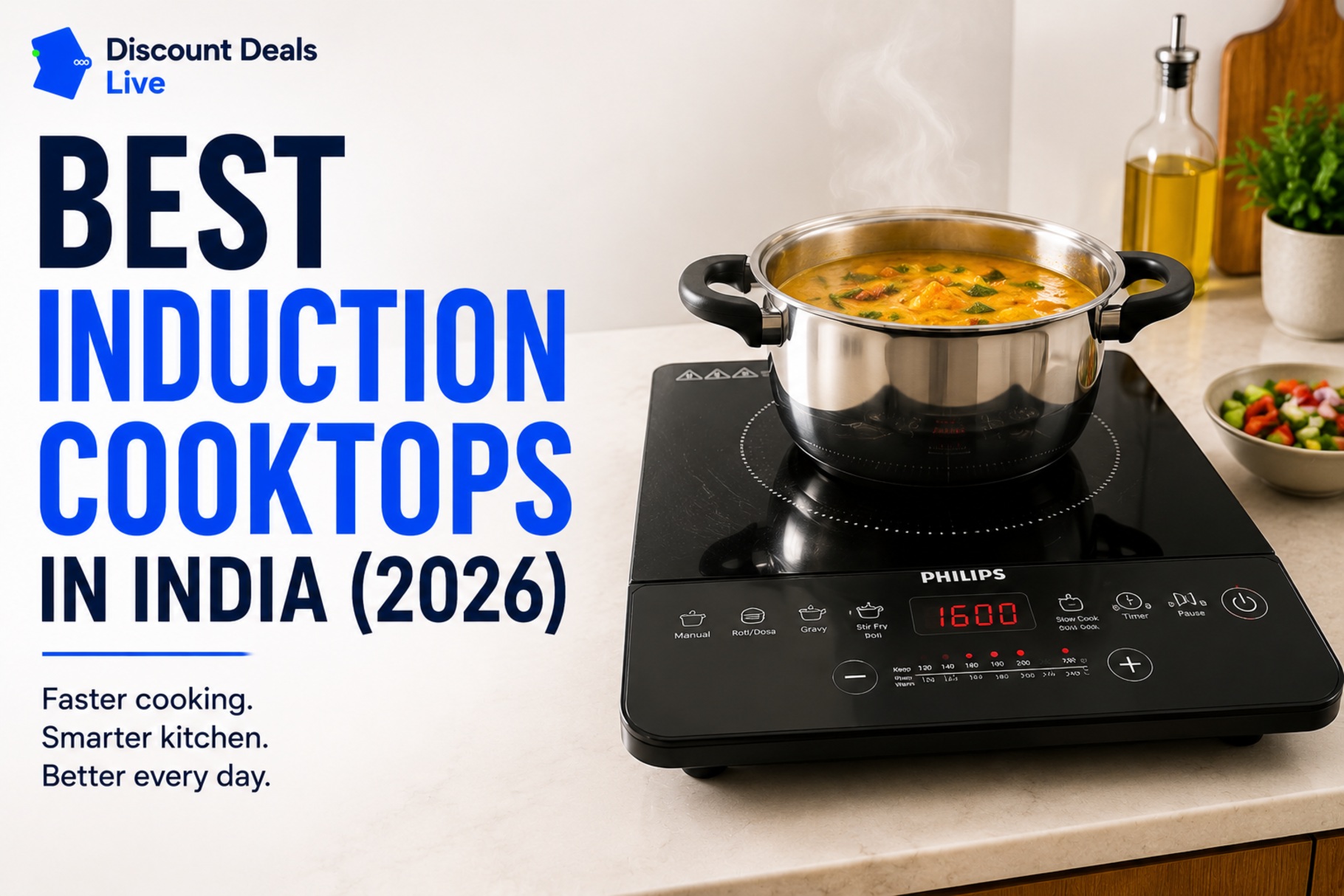
Best Induction Cooktops in India (2026)
Looking for the best induction cooktop for your kitchen? Compare power levels, cookware compatibility & safety, plus live deals on Discount Deals Live.


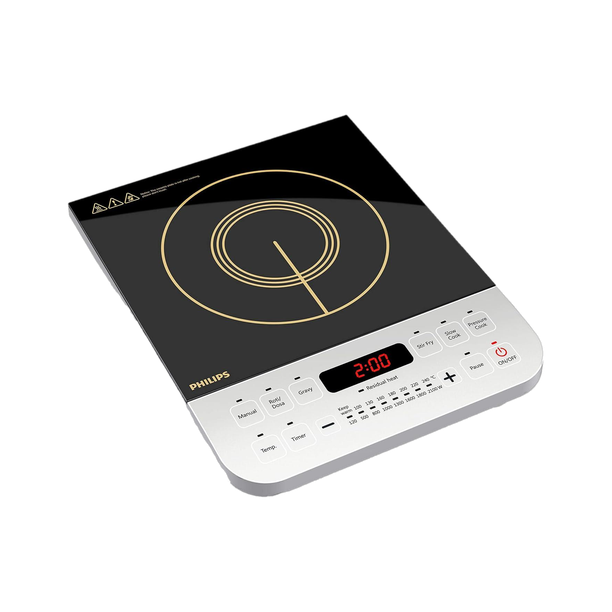

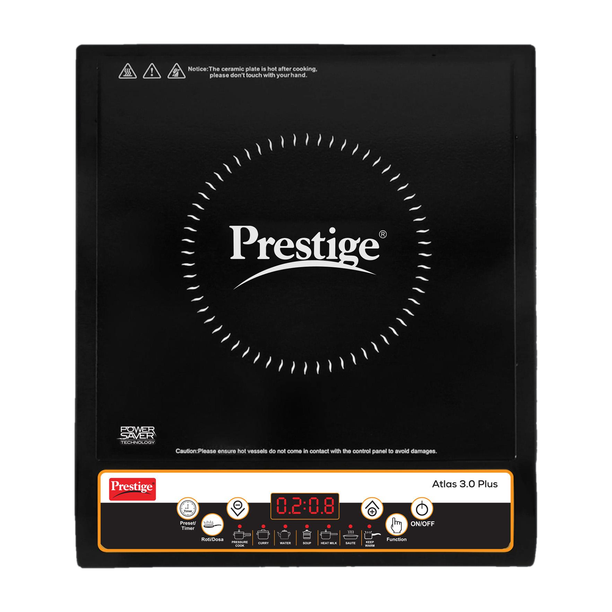
Induction cooktops have become a common secondary or primary cooking option in Indian kitchens, mainly for their faster heating and easier cleanup compared to gas. But induction cooking requires compatible cookware, and getting this wrong is the most common frustration new buyers run into. Here's what actually matters before you buy.
How Induction Cooking Works (and Why Cookware Matters)
Induction cooktops use electromagnetic energy to heat cookware directly, rather than heating the cooktop surface itself. This means the cookware must be magnetic (typically cast iron or certain stainless steel) for the cooktop to work at all — aluminum, copper, and glass cookware generally won't heat on an induction surface unless it has a compatible base layer built in. Before buying an induction cooktop, it's worth checking whether your existing cookware is compatible, since you may need to budget for new pots and pans.
What to Check Before Buying
- Power levels and wattage — most home induction cooktops range from 1200W-2000W; higher wattage generally means faster heating and more power for tasks like boiling large quantities of water
- Preset cooking modes — many models include presets for common cooking styles (boil, simmer, stir-fry), which can simplify temperature management for less experienced cooks
- Touch panel vs button controls — touch panels are easier to clean but can sometimes be less precise than physical buttons for quick adjustments during active cooking
- Auto pan detection — a genuinely useful safety and convenience feature that turns the cooktop off automatically if no compatible cookware is detected
- Overheat protection — prevents damage to the unit and reduces safety risk during extended cooking sessions
Pros & Cons of Induction Cooktops
Pros:
- Faster heating compared to gas for many cooking tasks, particularly boiling water
- Easier to clean, since the flat glass surface doesn't have burner grates or crevices to scrub
- Generally safer than open-flame cooking, with no gas leak risk and often better temperature precision
- Portable models make it easy to add extra cooking capacity without a full kitchen renovation
Cons:
- Requires induction-compatible cookware, which may mean replacing existing pots and pans
- Fully dependent on electricity, which matters during power outages unlike gas stoves
- Some cooks find the lack of visible flame makes it harder to gauge heat intensity intuitively at first
For First-Time Induction Buyers
If you're new to induction cooking and unsure about the switch:
- Check your existing cookware with a magnet test — if a magnet sticks firmly to the base, it's likely induction compatible
- Start with a single-burner portable model to try the experience before committing to a full built-in setup
- Preset cooking modes can help ease the learning curve for temperature management
a well-reviewed portable single-burner induction cooktop for beginners — LINK is a commonly recommended starting option.
For Regular Daily Cooking
If induction will be a primary cooking method rather than occasional use:
- Higher wattage (1800W+) provides more consistent performance for regular, varied cooking tasks
- A double-burner setup adds genuine convenience for households cooking multiple dishes simultaneously
- Durable touch controls with good reviews for long-term reliability matter more here than for occasional use
a well-reviewed higher-wattage induction cooktop for daily cooking — LINK works well for this use case.
Induction vs Gas: Which Should You Choose?
This often comes down to a mix of preference and practical constraints rather than one being universally better. Induction offers faster heating for many tasks, easier cleanup, and improved safety, but requires reliable electricity and compatible cookware. Gas offers cooking during power outages and works with any cookware, but comes with open-flame risks and more involved cleaning. Many households use both — gas as a primary and induction as a backup or for specific tasks like quick boiling.
Cookware Compatibility Quick Check
- Cast iron — generally compatible
- Stainless steel with a magnetic base — compatible (check with a magnet if unsure)
- Aluminum, copper, or glass without an induction-compatible base — generally not compatible
- Look for cookware explicitly labeled "induction compatible" if buying new pots and pans
Quick Comparison Checklist
| Feature | What to look for |
|---|---|
| Wattage | 1200-1500W occasional use, 1800W+ for daily heavy use |
| Cookware | Confirm induction compatibility before buying |
| Controls | Touch for easy cleaning, buttons for quick precise adjustment |
| Safety | Auto pan detection, overheat protection |
Today's Best Deals on Induction Cooktops
Prices on kitchen appliances shift with sale events and bank offers. Check live pricing before you buy:
- See real-time results for this exact search on Best Induction Cooktops — Live Search
- Browse the full Kitchen & Dining category for related deals
- Compare listings across Amazon Deals and Flipkart Deals side by side
Frequently Asked Questions
Can I use my existing cookware on an induction cooktop?
Only if it's magnetic — cast iron and certain stainless steel cookware generally work, while aluminum, copper, and glass typically don't unless they have a compatible base layer. A simple magnet test (checking if a magnet sticks firmly to the cookware's base) helps confirm compatibility before buying.
Is induction cooking more expensive than gas in terms of running cost?
This varies by region based on local electricity and gas pricing, but induction is often considered energy-efficient since it heats cookware directly rather than losing heat to the surrounding air, unlike open-flame gas cooking. Comparing your specific local utility rates gives a clearer picture.
What happens to induction cooking during a power outage?
Induction cooktops are fully dependent on electricity and won't function during a power outage, unlike gas stoves. Many households keep a gas stove as backup for this reason, particularly in areas with frequent power interruptions.
Do I need a single or double burner induction cooktop?
A single burner is often sufficient for occasional use, quick tasks, or as a backup to a primary gas stove. A double burner is more practical if induction will be your main cooking method and you regularly need to cook multiple dishes at once.
Check Best Deals for current live pricing on induction cooktops before you buy — the same model can be priced differently across platforms depending on ongoing offers.